
Evergreen Talent Group · 12 October 2026
Europe’s data centre market is entering 2027 with exceptionally strong demand, but the factors determining where new facilities can actually be delivered are changing.
Historically, location decisions centred heavily on connectivity, proximity to major population centres and access to established data centre ecosystems. Those factors remain important, but power availability, grid connection timelines and access to suitable land are increasingly determining where the next generation of European data centres will be built.
At the same time, artificial intelligence is accelerating demand for larger and more power-intensive facilities, while hyperscalers, cloud providers and increasingly AI-focused infrastructure companies compete for capacity.
The result is a European market that is not simply becoming larger. It is becoming more geographically diverse, more technically demanding and increasingly dependent on power infrastructure.
For contractors, developers and engineering professionals operating within the sector, this transformation is creating significant opportunities — and significant challenges.
Europe’s Data Centre Market Continues to Expand
The scale of growth entering 2027 is considerable.
CBRE expects the European data centre market to reach approximately 13GW of capacity by the end of 2026, representing around 20% year-on-year growth. It also reported that European colocation capacity contracted specifically for artificial-intelligence applications more than quadrupled during the first half of 2026. CBRE
Across the broader EMEA region, Colliers reports approximately 12.5GW of operational capacity, alongside a substantial pipeline of projects under construction, planned or at earlier development stages. Colliers
Demand therefore remains extremely strong.
The challenge increasingly lies on the supply side.
Despite significant investment and construction activity, CBRE expects European vacancy to remain close to historic lows, forecasting vacancy of around 6% by the end of 2026. CBRE
This creates an unusual market dynamic: Europe is delivering substantial new capacity while demand continues to absorb it almost as quickly as it becomes available.
AI Is Changing the Type of Data Centre Europe Needs
AI is perhaps the single biggest structural influence on the next stage of data centre development.
Traditional cloud computing already created enormous demand for digital infrastructure. Generative AI, machine learning and increasingly large-scale inference workloads are adding another layer.
JLL forecasts that global data centre capacity could grow at approximately 14% annually through 2030, with AI potentially representing around half of all data centre workloads by the end of the decade. JLL
The implications for construction and engineering are substantial.
AI-focused facilities can require:
significantly higher rack densities;
substantially larger electrical loads;
more sophisticated cooling infrastructure;
expanded UPS and backup-power systems;
increasingly complex MV and HV infrastructure;
greater commissioning requirements;
advanced controls, BMS and EPMS systems;
and considerably greater attention to energy efficiency and resilience.
This is influencing both the design of individual facilities and the locations in which they can realistically be developed.
For a conventional enterprise or colocation facility, proximity to a major city may remain highly valuable.
For an AI training campus requiring hundreds of megawatts, however, access to power can be considerably more important than proximity to the city centre.
Power Has Become the Defining Constraint
The availability of electricity has arguably become the most important issue facing European data centre development.
Colliers describes power availability, grid connection timelines and planning constraints as having overtaken demand as the primary barriers to development. Colliers
Major European hubs including:
Frankfurt
London
Amsterdam
Paris
Dublin
continue to attract strong demand, but delivering additional capacity in these locations can be increasingly difficult.
Grid infrastructure was never designed for the scale or speed of electricity demand now being created by hyperscale and AI infrastructure.
New developments may therefore face:
lengthy grid connection programmes;
restrictions on available capacity;
substantial transmission and substation requirements;
planning complexity;
increased land competition;
and higher development costs.
In Frankfurt, for example, JLL reports that some connection lead times can exceed 24 months, while in certain primary markets significantly longer timelines can apply. JLL
This is changing the fundamental question developers ask when evaluating a location.
It is increasingly less:
“Where would we ideally build?”
and more:
“Where can we secure sufficient power within the required timeframe?”
The European Data Centre Map Is Expanding
The traditional FLAP-D markets — Frankfurt, London, Amsterdam, Paris and Dublin — are not disappearing.
In fact, JLL estimates that their combined live capacity increased from approximately 1.8GW in 2019 to around 3.8GW by H1 2026, with a further 1.4GW under construction and approximately 2GW planned. JLL
But growth is increasingly spreading beyond them.
Colliers identifies markets including:
Madrid, Milan, Lisbon, the Nordics and parts of Central and Eastern Europe
as attracting increasing investor and operator attention. Colliers
This is an important distinction.
The European market is not necessarily moving away from the traditional hubs.
It is broadening around them.
JLL's analysis demonstrates the shift particularly clearly. Hyperscale campuses scheduled for 2026–2028 are expected to sit an average of approximately 175 kilometres from major EMEA hub cities, compared with only 46 kilometres for projects delivered between 2022 and 2025. JLL
That represents a significant geographic change in only a few years.
The Nordics Are Becoming Increasingly Important
Northern Europe is particularly well positioned for certain types of future data centre development.
Markets such as Finland, Sweden and Denmark can offer combinations of:
large-scale land availability;
access to renewable power;
relatively cool climates;
established electricity infrastructure;
and opportunities for large hyperscale campuses.
JLL expects a significant proportion of future European AI-related growth to move toward the Nordics and Tier 2 markets, particularly where large blocks of power can be secured. JLL
For contractors and professionals willing to operate internationally, this is likely to continue creating opportunities across Scandinavia.
Southern Europe Is Building Momentum
Southern European markets are also becoming increasingly relevant.
Madrid
Spain benefits from significant renewable-energy generation and substantial land availability, making Madrid and other Spanish locations attractive for larger developments.
Lisbon and Portugal
Portugal continues to attract attention as developers consider Atlantic connectivity, renewable energy and large-scale campus opportunities.
Milan
Milan is rapidly developing into one of Europe's more significant secondary data centre markets, attracting both international investment and new infrastructure projects.
These locations will increasingly compete with the traditional hubs for new capacity, particularly where developers can secure power faster and at a commercially viable cost.
Dublin Remains Important — but Power Is Critical
Ireland remains one of Europe's most established data centre markets.
Dublin has developed a sophisticated ecosystem encompassing hyperscalers, colocation providers, engineering consultancies, specialist contractors, commissioning companies and a highly experienced technical workforce.
That accumulated knowledge remains a major competitive advantage.
However, the Irish market also illustrates the wider European problem particularly clearly: demand for data centre capacity can grow faster than the electricity infrastructure required to support it.
For contractors and professionals, this means the Irish data centre market is increasingly connected with the broader European market.
Companies that originally built their capability in Dublin are now applying that knowledge across Germany, the Nordics, Benelux, Southern Europe and other emerging locations.
The movement of experienced Irish M&E and data centre professionals across Europe is therefore likely to remain an important feature of the sector entering 2027.
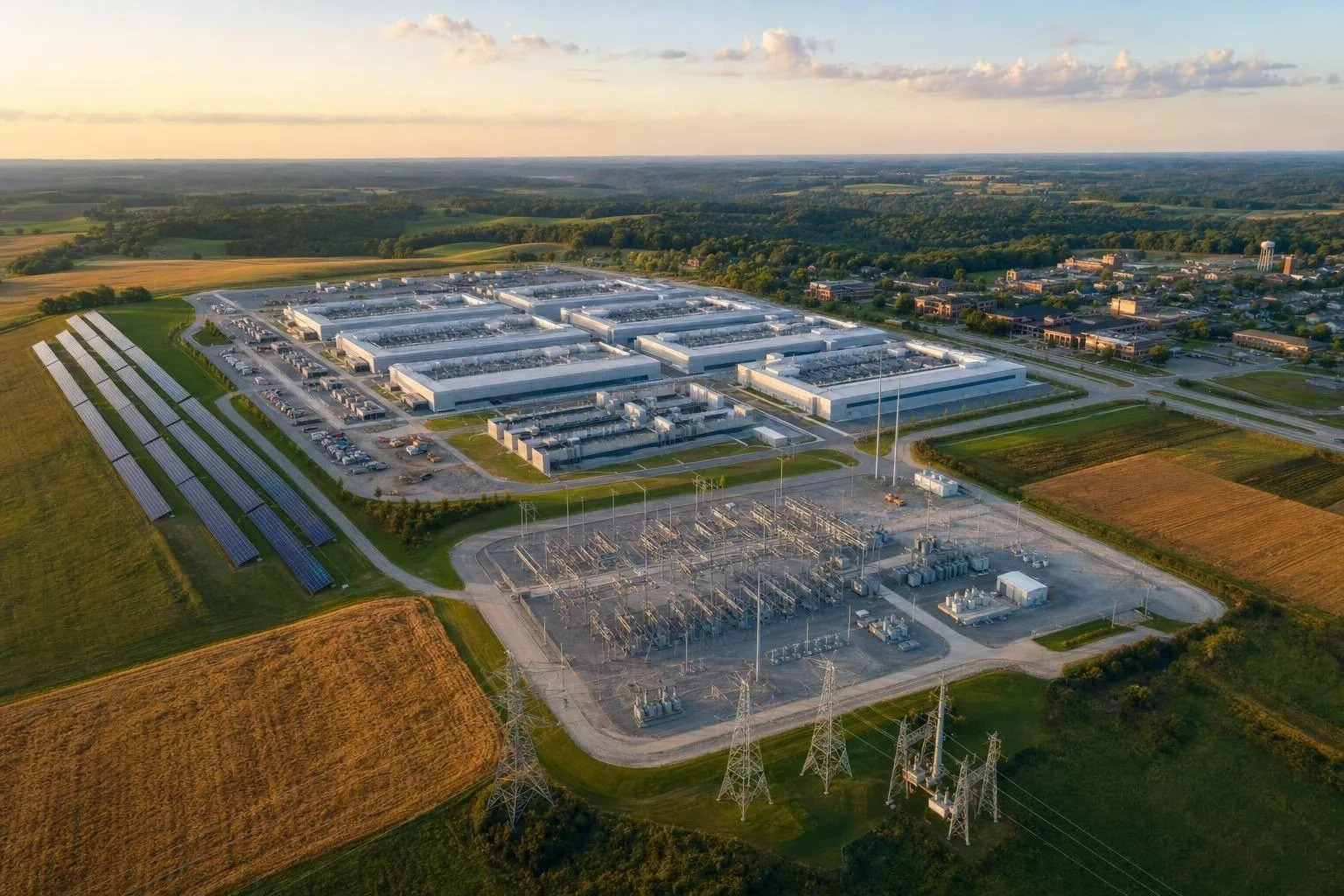
Power Infrastructure Is Becoming Part of the Data Centre Industry
One of the most important developments is the convergence between the traditional data centre sector and the power industry.
Developers increasingly need expertise far beyond conventional building services.
Projects may require:
HV grid connections;
primary substations;
transformers;
MV distribution;
protection and control systems;
switchgear;
UPS systems;
generators;
battery energy storage;
microgrids;
and potentially on-site generation.
CBRE notes that grid constraints are causing operators to examine on-site electricity generation and alternative energy strategies as potential solutions to lengthy connection times. CBRE
Colliers similarly highlights growing interest in self-generation, microgrids and energy-linked development strategies. Colliers
As a result, the boundary between data centre construction and energy infrastructure is becoming increasingly blurred.
That has significant implications for the labour market.
What Does This Mean for Data Centre Talent?
The scale and technical complexity of European development is increasing demand for experienced personnel across virtually every stage of project delivery.
Some of the areas where Evergreen Talent Group continues to see particularly relevant skills requirements include:
Electrical Project Management
Mechanical Project Management
M&E Project and Construction Management
Electrical and Mechanical Engineering
MV/HV Engineering
Commissioning Management
L1–L5 Commissioning
Electrical Commissioning
Switchgear and Protection Engineering
Planning & Project Controls
Quantity Surveying & Commercial Management
QA/QC and Quality Leadership
EHS Management
Design Management
BIM
OSM / Off-Site Manufacturing
OFCI Management
Project and Operations Leadership
The difficulty for employers is that many of the largest European developments are competing for the same experienced candidate population at the same time.
A Project Director, Commissioning Manager, Senior Planner or Electrical Construction Manager with multiple hyperscale projects behind them may simultaneously be relevant to projects in Ireland, Germany, Finland, the Netherlands and Southern Europe.
This creates a genuinely European talent market.
The Talent Proposition Will Matter More
Compensation alone is unlikely to solve the talent challenge.
As European projects become increasingly geographically dispersed, employers will need to consider the entire candidate proposition.
That includes:
rotation patterns;
accommodation;
flights;
local transportation;
subsistence arrangements;
tax implications;
project duration;
progression opportunities;
quality of project leadership;
and visibility of the employer's future European pipeline.
Candidates increasingly want to understand not simply the project they are joining, but what happens after that project finishes.
For contractors building long-term European businesses, the ability to demonstrate a credible multi-country pipeline will therefore become an increasingly important recruitment advantage.
What Will Define the European Market in 2027?
Entering 2027, several themes appear likely to dominate.
AI demand will continue increasing infrastructure requirements.
Power availability will increasingly determine development location.
The established European hubs will remain important, but new capacity will spread further from city centres and into secondary markets.
The Nordics, Iberia, Italy and other emerging regions will continue attracting investment.
Data centre and power infrastructure expertise will increasingly overlap.
And critically:
the availability of experienced engineering and construction talent will remain a major delivery constraint.
The European data centre opportunity remains enormous.
But the next phase of the market will not simply be about who can secure the next project.
It will increasingly be about who can secure the power, supply chain, technical capability and people required to actually deliver it.
Evergreen Talent Group
Evergreen Talent Group is a specialist recruitment and executive search consultancy supporting the Data Centre, M&E, Power, Engineering and Construction markets across Ireland, the United Kingdom and mainland Europe.
We work with contractors and engineering organisations across disciplines including Mechanical, Electrical, Commercial, Planning, Commissioning, Quality, EHS, Design, BIM, Power and Executive Leadership.
Whether you are building a European project team, strengthening an existing leadership structure or considering your next career move within the data centre market, Evergreen Talent Group can provide specialist recruitment support and market intelligence.
Hiring across Europe?
Contact Evergreen Talent Group to discuss your current or upcoming talent requirements.
Considering your next move?
Explore our current opportunities across Ireland and Europe.